
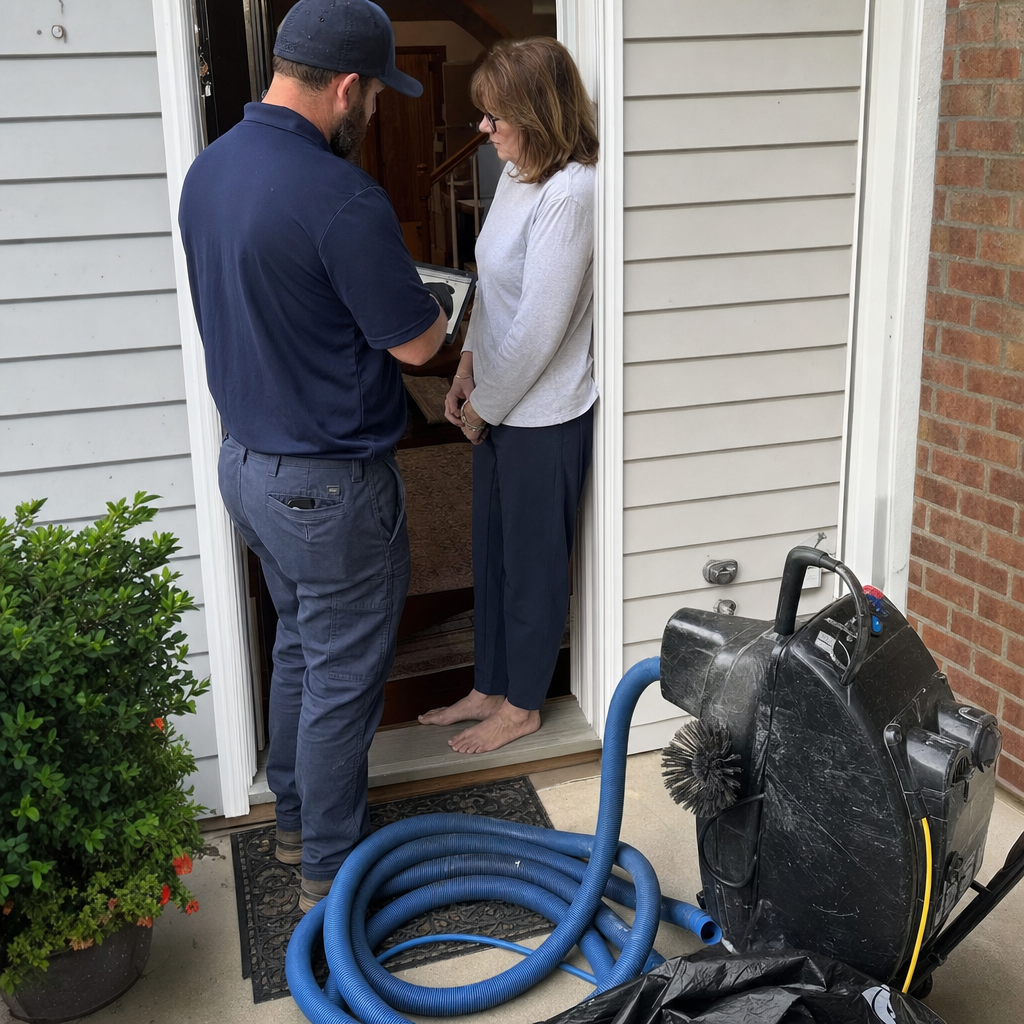
Duct Sealing Cost in Virginia, VA: What You’ll Actually Pay Based on Your Home’s Access and Duct Layout
Duct sealing in Virginia typically runs $400–$1,800 depending on whether we’re sealing accessible joints in a crawlspace, treating in-wall returns, or performing a full system audit with Aeroseal injection. Most Virginia homes we see fall in the $650–$1,200 range for mechanical sealing of the main trunk and branch connections. Call (844) 668-1229 for a free, on-site estimate — Ronald Cooper handles every assessment personally.
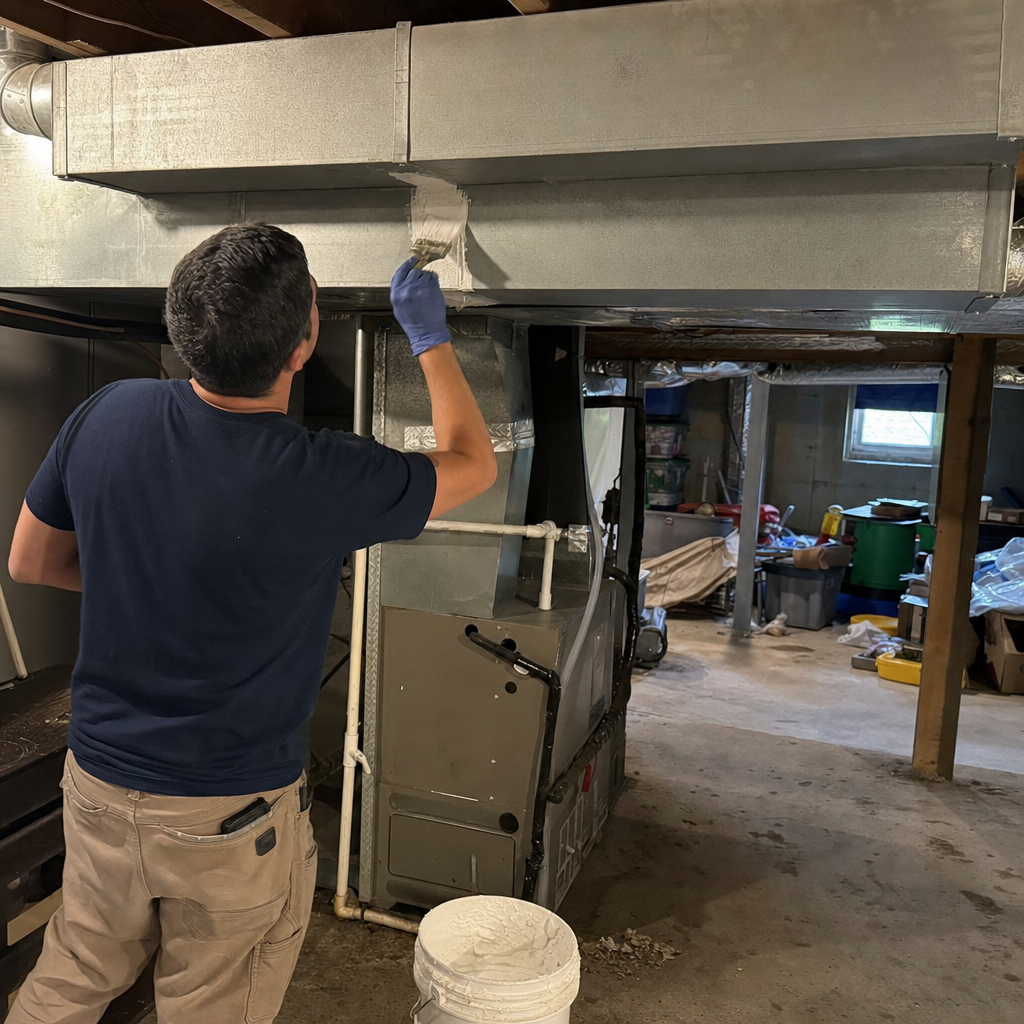
Last March, we were under a house in the Larchmont area of Norfolk where the homeowner’s summer electric bills had jumped forty percent over two years. The flex duct at every collar had pulled loose in the crawlspace — not from damage, just from the normal expansion and contraction of Virginia’s humidity cycle. We could feel the 55-degree conditioned air pouring straight into the crawlspace before we even turned on our test fan. That homeowner didn’t need new ducts. They needed sealing, and they needed someone who could show them exactly where the money was going.
That’s the part most pages about duct sealing cost skip: the price only makes sense once you understand what type of sealing your house actually needs, and what happens in Virginia’s climate when you don’t do it.
Why Virginia’s Climate Makes Duct Sealing Different from Other Markets
Virginia sits in that rough zone where we get four genuine seasons, but summer sticks around long enough — and humid enough — that air conditioning runs hard from May through October. When your ducts leak in Arizona, you’re losing dry conditioned air. When they leak in Virginia, you’re pulling hot, humid crawlspace or attic air back into the system. That humidity load doesn’t just waste energy; it strains your coil, shortens equipment life, and can redistribute mold spores through the supply vents.
The construction patterns here make it worse. Virginia Beach and Norfolk have endless subdivisions built from the 1960s through the 1980s with ductwork routed through vented crawlspaces. Those crawlspaces experience massive humidity swings — 40% relative humidity one morning, 85% after a summer thunderstorm. Metal duct tape adhesive breaks down. Flex duct inner liners separate from collars. Mastic compound that was applied thinly in 1987 has turned to dust.
We see the pattern constantly in neighborhoods like Colonial Place, Lochhaven, and the older sections of Chesapeake: the homeowner calls for duct cleaning because of dust or odors, and during our pre-cleaning inspection with the Rotobrush camera system, we find that the real problem isn’t dirty ducts — it’s that the ducts were never properly sealed in the first place, and they’ve been pulling fiberglass insulation, crawlspace soil moisture, and whatever else is down there into the airflow stream.
Ronald Cooper figured out years ago that you can diagnose a lot of this before you run any equipment. Debris accumulation patterns tell the story. Heavy, uniform dust coating on the return side but clean supply lines? Likely a disconnected return boot pulling attic air. Dark, fibrous material in the supply trunk? That’s usually degraded flex duct liner or insulation being drawn through gaps. If I can show you what I found, you can decide what it’s worth fixing.
Two Types of Duct Sealing — and What Each Actually Costs
Most homeowners don’t realize there are two fundamentally different approaches to sealing ducts, and they solve different problems at different price points. We use both, but we don’t recommend both for every house. Here’s how we break it down on jobs across Virginia:
| Sealing Method | Best For | Typical Cost Range |
|---|---|---|
| Mechanical sealing with mastic compound and metal-backed tape at joints, collars, and boots | Accessible ductwork in crawlspaces, attics, or basements; visible gaps at connections; older systems with degraded original seals | $400–$1,200 |
| Aeroseal-style internal sealant injection (pressurized polymer particles that bond to leak edges from inside the duct) | In-wall or otherwise inaccessible duct runs; systems with many small leaks distributed throughout; new construction verification | $1,200–$2,500 |
| Full system audit with blower-door duct blaster test, then targeted sealing | Homes with persistent comfort issues or high bills where leak location is unknown; best ROI documentation for energy programs | $800–$1,800 |
Mechanical sealing is what we do on probably eighty percent of Virginia homes. Ronald Cooper crawls the space with a work light and a bucket of water-based mastic — the proper UL-181 rated compound, not the cheap latex caulk some crews use — and reseals every joint, every saddle tap, every boot connection. We reinforce with metal-backed tape, not cloth duct tape, which fails in humidity. For a typical 1,500-square-foot ranch with ductwork in a crawlspace, that’s usually a half-day job and falls in the $650–$900 range.
Aeroseal makes sense when the ducts are inside walls or otherwise inaccessible, or when there are so many small leaks that manual sealing would be impractical. We block the vents, pressurize the system, and inject sealant particles that exit through leaks and bond at the edges. It’s effective — we’ve seen leakage reductions of 80% or more — but it’s not magic. It doesn’t fix disconnected ducts, crushed flex, or major gaps. We always inspect first with our Nikro camera systems to make sure Aeroseal is appropriate, because at $1,500–$2,000, you don’t want to seal over a problem that needs physical repair.
The full audit option includes a duct blaster test — essentially a blower door for your duct system — that gives us a precise CFM leakage number before and after. In Virginia, where Dominion Energy and some municipal co-ops offer rebates for documented duct sealing, that paperwork can be worth the extra cost. We’ve helped homeowners in Virginia Beach and Suffolk qualify for programs they didn’t know existed.
When to Clean First, When to Seal First — and Why Order Matters
This is where a lot of homeowners get tripped up, and frankly where a lot of companies get it wrong. Duct cleaning and duct sealing are often sequenced together, but the order depends on what we’re starting with.
Clean first when: The system is visibly contaminated — heavy dust, mold, pest debris, or construction residue. We need to inspect the full interior surface with our Rotobrush and camera systems to identify all leak points, and we can’t do that accurately through a layer of packed dust. Also, if we’re going to seal with mastic, we need clean metal or duct board to bond to. Mastic over dust is mastic over dust — it’ll fail in a year.
Seal first when: The ducts are relatively clean but known to be leaky, and the homeowner’s primary complaint is efficiency, humidity, or uneven temperatures. Sealing stops the infiltration of unconditioned air, which then makes the cleaning more effective and longer-lasting when we do it. We’ve had customers in Portsmouth and Hampton where we sealed first, then cleaned six months later — the second cleaning pulled almost nothing because we’d stopped the dirt source.
Same-day sequence when: The system is moderately dirty and moderately leaky, and the budget allows for both. We inspect, identify the worst leaks, seal those first, then clean the full system. The cleaning verifies our seals (we check for airflow changes at each vent) and leaves everything protected. We use Guardsman-sourced sanitizing products on these jobs, applied after sealing and cleaning are complete, so the treatment actually stays on the surfaces it’s meant to protect.
The wrong order wastes money. We’ve been called in after franchise crews who cleaned first, then “sealed” with spray-on coatings that did nothing — the leaks were still there, still pulling in crawlspace air, and the cleaning was contaminated within a season. That’s not a seal. That’s a upsell.
What Drives Price Up or Down on Virginia Duct Sealing Jobs
Every house is different, but after eleven years of crawling Virginia crawlspaces, we can predict the cost drivers pretty accurately:
- Access difficulty: A 36-inch crawlspace with a vapor barrier is straightforward. An 18-inch crawlspace with standing water, active termite shields, or decades of DIY wiring takes longer and costs more. We don’t charge hazard pay, but we do charge for the time it takes to do it right.
- Duct material and age: Galvanized steel duct with original snap-lock seams from 1972 takes more labor than modern flex duct with factory-sealed connections. Older duct board, common in 1980s Virginia Beach builds, often needs partial replacement before sealing is worthwhile.
- Extent of leakage: Three loose collars versus fifteen separated joints versus a completely disconnected return trunk — each is a different job. Our pre-work inspection with Nikro camera systems lets us quote accurately before we start.
- Whether repair precedes sealing: Crushed flex duct, rusted-out metal, or collapsed insulation needs fixing first. We handle that as part of our Duct Repair & Sealing scope, but it adds to the total versus a pure sealing job.
- Sealing method chosen: Mechanical sealing is labor-intensive but material-cheap. Aeroseal is equipment-intensive and material-expensive. The right choice depends on your system’s condition, not our preference.
We don’t quote over the phone for sealing work. The variability is too high, and we’ve learned that guessing leads to bad outcomes for everyone. Ronald Cooper will come out, crawl the space, run the camera, and give you a written estimate with line-item options. No pressure — we’ve walked away from jobs where the ductwork was too far gone to make sealing economical, and told the homeowner to put the money toward replacement instead. That’s not lost business. That’s the kind of honesty that built our 962 reviews.
Energy Savings and Payback: What Virginia Homeowners Actually See
The Department of Energy’s long-cited figure — that 20–30% of conditioned air escapes through duct leaks — holds up in our experience, but the financial impact varies with your specific situation. A homeowner in Great Neck with a 3,500-square-foot house, two HVAC systems, and a vented crawlspace is losing more absolute dollars than a condo owner in Town Center with a single heat pump and interior ductwork.
What we do see consistently: after proper mechanical sealing, the HVAC runtime drops measurably. The house holds temperature longer. The upstairs-downstairs differential shrinks. Humidity control improves, which is the benefit Virginia homeowners notice first — that clammy feeling when the AC has been running all afternoon but the house still feels wet.
Payback timelines we’ve observed: for a $700 sealing job on a typical 2,000-square-foot home with ducts in a crawlspace, summer electric bill reductions of $30–$60 per month are common. That’s a 12–24 month payback, ignoring equipment longevity benefits. For homes with documented leakage above 30% (we’ve seen 45% in older Norfolk properties), payback can be under a year. The savings persist for years — properly applied mastic lasts the life of the duct system.
Aeroseal payback is longer upfront — $1,500–$2,000 takes more months to recover — but in homes where mechanical sealing isn’t possible, it’s the only path to improvement. We discuss both options honestly and let the numbers guide the decision.
FAQs
Most Virginia homeowners pay between $650 and $1,200 for mechanical sealing of accessible ductwork, while Aeroseal injection for inaccessible systems runs $1,200–$2,500. How much does duct repair and sealing cost? It depends on your home’s specific needs, which is why we always assess in person. Call (844) 668-1229 for a free, on-site estimate — Ronald Cooper assesses every job personally.
Sealing and spot repair is almost always cheaper than full replacement — typically 20–30% of replacement cost — but only if the duct structure is sound. We evaluate metal fatigue, insulation condition, and overall layout during our inspection; sometimes replacement is the smarter long-term investment, and we’ll tell you straight if that’s the case.
Yes, when the system condition allows — we often sequence inspection, targeted sealing, and then cleaning in a single visit. However, heavily contaminated systems should be cleaned first so we can identify all leak points and ensure proper mastic adhesion. Ronald Cooper determines the optimal sequence during his pre-work assessment.
Significant duct leakage typically shows as uneven room temperatures, excessive dust near vents, humidity that won’t drop despite AC running, or utility bills that spike without rate changes. We confirm leakage with visual inspection and, when needed, blower-door duct testing — but the homeowner symptoms are usually obvious once you know what to look for.
Get an Honest Assessment of Your Duct Sealing Cost in Virginia
We’ve been specializing in duct and HVAC cleaning for eleven years, and we’ve learned that the best customer is an informed one. Ronald Cooper will crawl your crawlspace, run the camera, show you what’s actually happening, and give you a written estimate with no obligation. Nearly 1,000 verified reviews at 4.9 stars — look them up before you book. Call (844) 668-1229 or start at our home page to schedule your free estimate.
Written by Ronald Cooper, Owner & Lead Technician at Anchor Air Duct Cleaning Service Virginia, serving Virginia, VA.
What Our Customers Say
"Told me straight that our ducts were in decent shape and didn't need doing every year like the mailer companies claim."
— Raj Reddy"My wife's allergies had been bad in this house since we moved in. It's been two months since they did the ducts and it's noticeably better. Not a miracle, but real."
— Omar Aziz"Ran a negative air machine on the whole system rather than the shop vac on a stick that the cheap outfit down the road uses. Showed me the before and after photos from inside the trunk line and it was genuinely disgusting."
— Michael Reed