
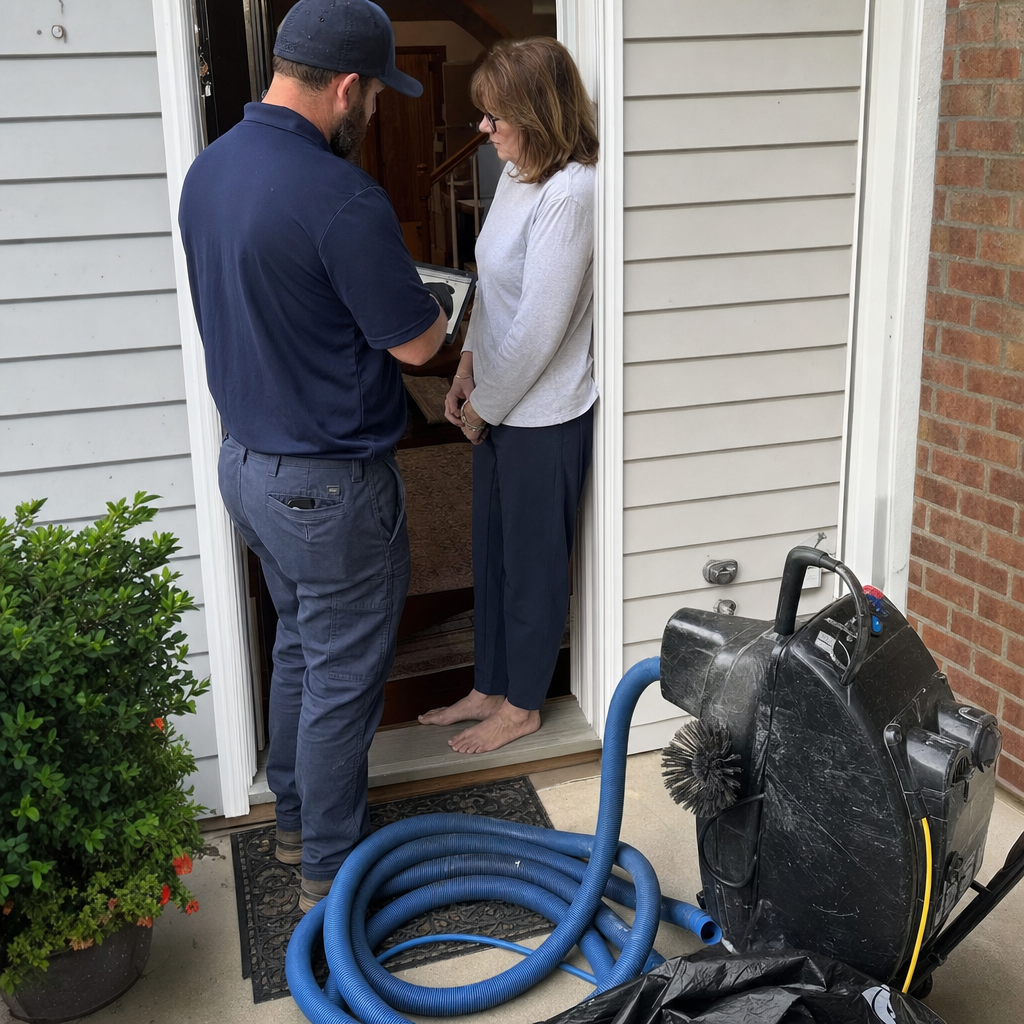
How Much Does Dryer Vent Cleaning Cost in Virginia Beach?
Our Dryer Vent Cleaning services in Virginia Beach, VA typically cost between $99 and $199 for a standard single-family home, with most homeowners landing somewhere in the $120–$160 range depending on vent length, accessibility, and the last time the system was serviced. Homes in areas like Great Neck, Kempsville, and Oceanfront-adjacent neighborhoods often run toward the higher end of that range due to longer duct runs and older construction layouts. At Anchor Air Duct Cleaning Service, estimates are always free — call (844) 668-1229 and we’ll give you a straight number before we schedule anything.
Dryer Vent Cleaning Cost Breakdown (2026)
Dryer vent cleaning in Virginia Beach isn’t a flat-rate commodity, but there are clear price bands based on what the job actually involves. Here’s how the numbers break down for the local market in 2026:
| Service Type | Typical Price Range (Virginia Beach) |
|---|---|
| Standard dryer vent cleaning (up to 10 ft run) | $99 – $129 |
| Extended vent run (10–25 ft) | $129 – $169 |
| Long or complex vent run (25+ ft, bends, multi-story) | $169 – $229 |
| Dryer vent cleaning + video inspection | $150 – $250 |
| Dryer vent cleaning + reroute or repair (minor) | $200 – $399 |
| Dryer vent cleaning + bird nest / debris blockage removal | $150 – $250 |
| Multi-unit / property manager rate (per unit) | $79 – $119 (volume dependent) |
These ranges reflect what we see across Virginia Beach jobs — not national averages pulled from a database. The biggest cost driver is almost always vent length combined with how many bends and elbows the duct makes between your dryer and the exterior wall cap. A one-story ranch in Bayside with a short, straight run to an exterior wall is a different job from a stacked-laundry unit on the second floor of a townhome in Town Center where the vent travels 35 feet through a ceiling chase. Both need cleaning; they just don’t cost the same.
One thing worth knowing: Virginia Beach’s coastal humidity accelerates lint compaction inside dryer vents. Moist air from the Atlantic makes lint clump faster and stick harder to duct walls than you’d see in drier inland markets. That’s not a scare tactic — it’s a reason why many Virginia Beach homeowners find their vents more congested at the annual cleaning than they expected.
What Affects Dryer Vent Cleaning Pricing in Virginia Beach
- Total vent length: Every additional foot of duct adds cleaning time and material cost. Homes in neighborhoods like Red Mill Farm and Landstown, which tend to feature two-story construction with laundry on upper floors, frequently have vent runs that push 20–30 feet before reaching an exterior exit point.
- Number of turns and elbows: Each 90-degree elbow is a lint trap. A vent with four bends is meaningfully harder to clear than a straight run of the same length, and it requires more passes with professional rotary equipment to actually clear the buildup — not just push it around.
- Time since last cleaning: A vent that hasn’t been serviced in four or five years — or ever — will have compressed lint that takes longer to break up. First-time cleanings on older Virginia Beach homes, especially those built in the 1980s and 1990s in areas like Aragona Village or Lynnhaven, regularly involve heavier buildup than annual-service properties.
- Vent material: Flexible plastic or foil accordion ducting (still present in a lot of older Virginia Beach homes) is a fire and clog hazard on its own, and if it’s damaged, cleaning alone won’t solve the problem. Rigid metal ducting is the right material and cleans more effectively. If your home still has the accordion-style plastic duct, expect a conversation about replacement alongside the cleaning quote.
- Access and location of the exterior cap: Some Virginia Beach homes vent the dryer through the roof rather than a side wall — a design choice more common in certain 1970s–1980s construction in the Kempsville and Centerville corridors. Roof-exit vents are harder to fully clear and may require additional time and equipment to service properly.
- Blockages beyond lint — bird nests and pest debris: Virginia Beach’s warmer climate means starlings and house sparrows actively nest in exterior vent caps from early spring through summer. A blocked cap can back up a vent system completely. Removing a nest and clearing the resulting debris adds to the job scope and the price, but it’s work that needs to happen — a blocked dryer vent is a documented fire risk, not a minor inconvenience.
How to Save on Dryer Vent Cleaning in Virginia Beach
The most straightforward way to keep dryer vent cleaning costs predictable is to schedule it on a regular cycle rather than waiting for a symptom. When a vent is cleaned annually, each visit is a maintenance job — typically 30–45 minutes, lower labor cost, no surprises. When a vent hasn’t been touched in three or four years, the same technician is doing heavier work for longer. The annual cleaning pays for itself in consistency.
A few other approaches that actually move the needle in the Virginia Beach market:
- Bundle with air duct cleaning: If you’re already having your home’s air duct system serviced, adding a dryer vent cleaning to the same appointment almost always costs less than two separate service calls. We handle both, and scheduling them together is one of the more common requests we see from Virginia Beach homeowners who want to address the whole house at once.
- Replace accordion-style flexible duct now: If your dryer is currently connected to plastic or foil flexible ducting, replacing it with rigid metal duct reduces future cleaning frequency and makes each future cleaning faster and more effective. The upfront cost is modest; the long-term savings in cleaning time and fire risk are real.
- Get a free estimate before you commit: Some Virginia Beach companies quote a low number over the phone, then add fees on-site once they’ve seen the job. We quote after we understand the job — call (844) 668-1229 and we’ll ask the right questions to give you an accurate number upfront.
- Property managers: ask about volume pricing. If you manage multiple units in Virginia Beach — whether in a condominium complex near Shore Drive or a portfolio of single-family rentals in the Chesapeake Beach area — volume scheduling brings the per-unit cost down meaningfully. It’s worth asking about directly.
- Don’t skip the cleaning to save money short-term: A clogged dryer vent forces the appliance to run longer cycles, which drives up electricity costs. The U.S. Fire Administration consistently lists clogged dryer vents as one of the leading causes of residential fires. The $130 annual cleaning is cheaper than the alternative in every direction.
FAQs — Dryer Vent Cleaning Cost in Virginia Beach
How much does dryer vent cleaning cost in Virginia Beach, VA?
Most Virginia Beach homeowners pay between $99 and $199 for dryer vent cleaning, with the majority of standard jobs falling in the $120–$160 range. Longer vent runs, roof exits, or heavy blockages — including bird nests common in coastal Virginia homes — push the price toward the higher end. Call (844) 668-1229 for a free estimate specific to your home’s setup.
How often should I have my dryer vent cleaned in Virginia Beach?
Once a year is the right frequency for most households. Virginia Beach’s humidity causes lint to compact faster than in drier climates, and the region’s warmer winters mean dryers often run harder and longer during high-humidity shoulder seasons. Households with large families doing daily laundry, or those running gas dryers, may benefit from a cleaning every eight to ten months. If your dryer is taking two cycles to dry a normal load, that’s one of the Signs You Need Dryer Vent Cleaning in Virginia, VA — attention is needed now regardless of when it was last cleaned.
Is dryer vent cleaning worth the cost?
Yes — for two reasons that are straightforward to calculate. A clogged vent makes your dryer run inefficiently, adding measurable time and energy cost to every load. More significantly, the National Fire Protection Association reports that dryer fires are responsible for thousands of home fires annually, with failure to clean the vent as the leading contributing factor. A $130–$160 annual cleaning in Virginia Beach is a cost-effective way to avoid both outcomes. It’s not a luxury service — it’s basic home maintenance.
What’s included in a dryer vent cleaning from Anchor Air Duct Cleaning?
Every dryer vent cleaning we perform in Virginia Beach includes clearing the full duct run from the dryer connection to the exterior cap, removing lint and debris from inside the duct walls using professional rotary cleaning systems (we use Rotobrush and Nikro equipment — not consumer-grade shop vacuums), and inspecting the exterior cap for blockages, damage, or missing dampers. Ronald Cooper is the one doing the work — not a subcontractor or a first-week technician. If we find something that needs repair, we tell you specifically what it is and what it costs to fix before we do anything.
Can a clogged dryer vent damage my dryer or home?
A clogged dryer vent can shorten the life of your dryer by causing the heating element and motor to overwork, and it’s a genuine fire risk — lint is highly combustible and a blocked vent means heat has nowhere to escape. In Virginia Beach’s older housing stock, particularly homes in the Thalia and Princess Anne neighborhoods where original duct configurations may have never been updated, we regularly find vents that are 70–80% blocked before a homeowner notices a performance issue — which is why searching Dryer Vent Cleaning Near Me in Virginia, VA before problems escalate matters. By the time your dryer is obviously struggling, the risk has been building for a while. If your dryer is taking longer than one normal cycle to dry a full load, call (844) 668-1229 — we’ll assess it same week.
Do you offer dryer vent cleaning for apartments and rental properties in Virginia Beach?
Yes. We work regularly with property managers across Virginia Beach — from condo associations near the Oceanfront to rental portfolios in the Newtown Road and Military Highway corridors. Multi-unit scheduling brings the per-unit cost down, and having documented annual dryer vent cleaning records is increasingly expected by property insurers. Call (844) 668-1229 to talk through a schedule and get a volume quote for your specific property count.
Why Virginia Beach Homeowners Book Anchor Air Duct Cleaning
There’s no shortage of dryer vent cleaning offers in Virginia Beach — coupon mailers, franchise crews, handyman add-ons. What those options usually share is inconsistency: different technicians every time, consumer-grade equipment, and a business model where dryer vents are an afterthought between other services.
Anchor Air Duct Cleaning Service is structured differently. Ronald Cooper built this company around one specialty — air duct and dryer vent cleaning — and has worked in that specialty exclusively for 11 years. When you book with us in Virginia Beach, Ronald is the technician who shows up. Not a supervisor who watches, not a dispatcher who fields your call — the person who knows the equipment, reads the duct, and handles the work. That’s a structural differentiator, not a marketing line.
The equipment backs it up. We use Rotobrush and Nikro systems — professional-grade rotary brushing and extraction equipment that’s used by HVAC contractors and industrial cleaning operations. That equipment costs more to own and operate than a shop vacuum, and it produces a categorically different result. Lint that’s been compressed against duct walls for three years doesn’t come out with airflow alone.
Nearly 1,000 verified reviews at 4.9 stars reflects what happens when you do one thing consistently well across hundreds of actual homes. Look them up before you book — that’s exactly the kind of verification we’d encourage.
For full context on our service area and approach, visit our Dryer Vent Cleaning in Virginia page, or return to our home to see the complete range of services we offer Virginia Beach homeowners and property managers.
Ready to Schedule? Get a Free Estimate Today
If your dryer is running slow, your last cleaning was more than a year ago, or you’ve never had the vent serviced since moving into your Virginia Beach home, it’s the right time to make the call. Ronald Cooper will give you a straight answer on what the job involves, what it costs, and when we can get there — no pressure, no surprise fees on-site, just Affordable Dryer Vent Cleaning in Virginia, VA.
Call (844) 668-1229 to schedule your free dryer vent cleaning estimate in Virginia Beach. We serve the full Virginia Beach area including Kempsville, Great Neck, Bayside, Oceanfront, Lynnhaven, Red Mill, Town Center, and surrounding neighborhoods.
Written by Ronald Cooper, Owner and Lead Technician at Anchor Air Duct Cleaning Service Virginia, serving Virginia Beach since 2013.
Pricing reflects the Virginia Beach market as of 2026. Anchor Air Duct Cleaning Service Virginia offers free estimates — call (844) 668-1229.
What Our Customers Say
"My wife's allergies had been bad in this house since we moved in. It's been two months since they did the ducts and it's noticeably better. Not a miracle, but real."
— Omar Aziz"Ran a negative air machine on the whole system rather than the shop vac on a stick that the cheap outfit down the road uses. Showed me the before and after photos from inside the trunk line and it was genuinely disgusting."
— Michael Reed"Found a disconnected run in the crawlspace while they were in there and told me about it rather than cleaning around it."
— Carmen Ramirez