
Rotobrush Air Duct Cleaning in Virginia Beach: A Homeowner’s Guide
Rotobrush air duct cleaning in Virginia Beach typically costs $400–$800 for a full residential system and takes 3–5 hours when done properly. The Rotobrush system combines a rotating brush head with simultaneous vacuum extraction — the only method that mechanically agitates debris while removing it in one pass, rather than blowing it deeper into your ducts. If you’d rather not sort through equipment claims yourself, call us at (844) 668-1229 and we’ll walk you through exactly what your home needs.
Here’s the thing most Virginia Beach homeowners don’t realize until it’s too late: the Rotobrush isn’t a brand name you’d recognize like Dyson or DeWalt, but it’s the equipment benchmark that separates contractors who invested in serious tools from those running glorified shop vacs through your vents. We’ve been in homes across Kempsville, Great Neck, and Sandbridge where the previous “cleaning” stirred up more dust than it removed — because the crew used compressed air alone, with no mechanical agitation and no contained extraction. That’s the difference this guide is about.
How the Rotobrush System Actually Works
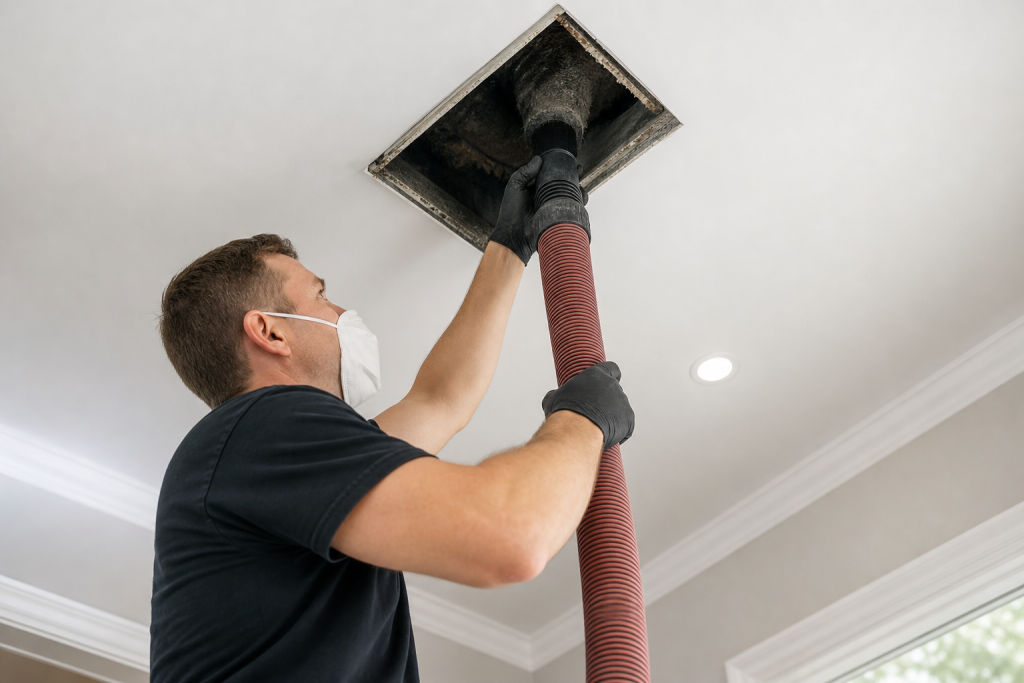
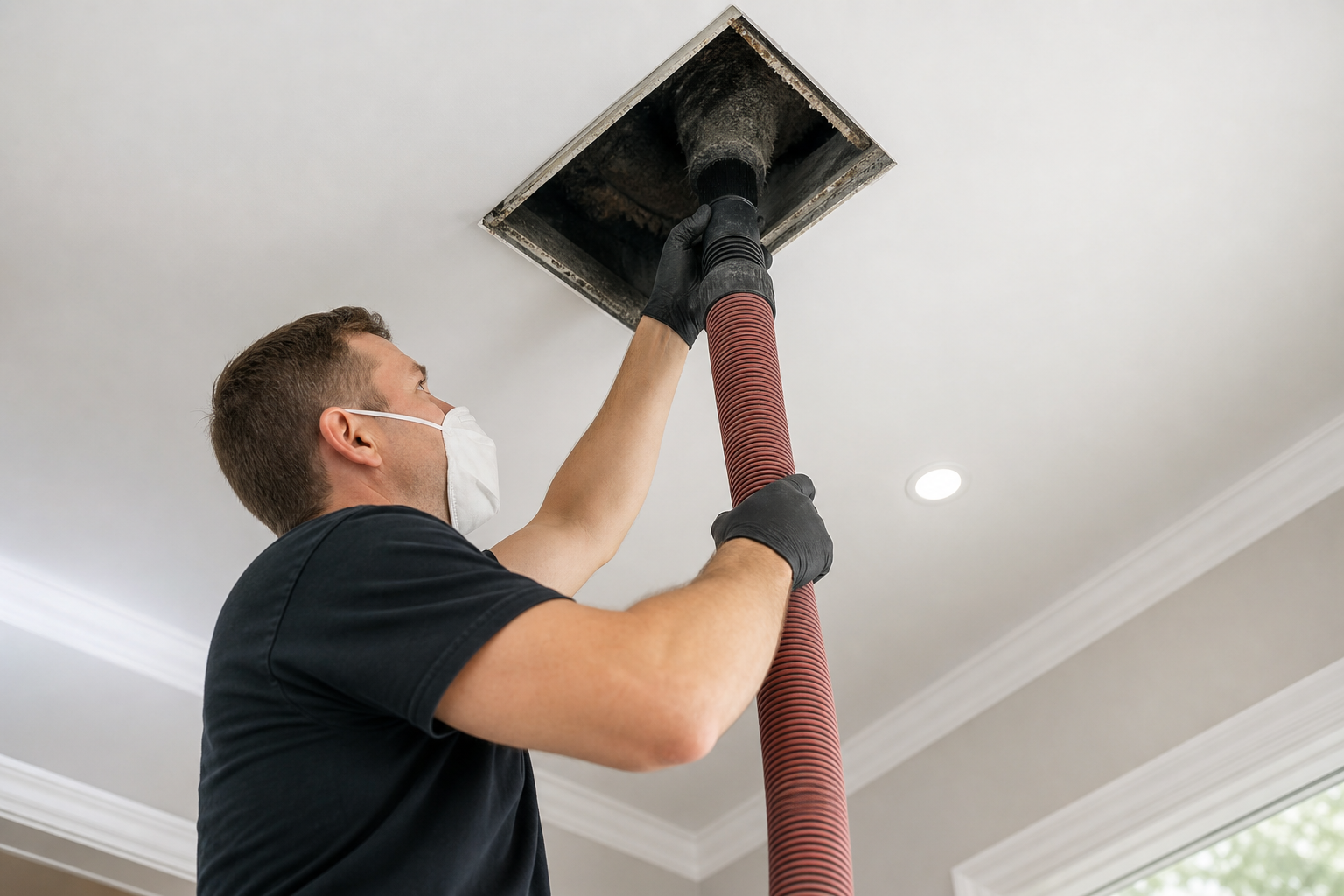
The Rotobrush is a portable, truck-mounted or cart-based system built around one mechanical principle: a rotating brush scrubs the duct interior while a high-volume vacuum pulls dislodged debris through a sealed hose into a containment bag. The brush and vacuum operate simultaneously, not sequentially.
Here’s what happens inside your Virginia Beach ductwork:
- Brush agitation: A flexible cable drive spins a brush head at 450–900 RPM, physically breaking loose adhered dust, pet dander, and construction debris that has bonded to duct walls over years.
- Simultaneous extraction: A 2-stage or 3-stage vacuum motor pulls 500+ CFM through the same hose, capturing dislodged material before it can resettle downstream.
- Containment: All debris collects in a visible bag or drum — you can inspect the volume and type of material removed, which is your proof of work performed.
This matters because the alternative — the “blow and go” method used by low-cost operators — fires compressed air through the ducts and hopes your HVAC filter catches what gets stirred up. In our 11 years of duct work, we’ve seen that approach push debris into corners of flex duct where it compacts into dense mats. The Rotobrush’s mechanical scrubbing is the only residential method that addresses this directly.
We use Rotobrush alongside our Nikro negative-air machines on larger Virginia Beach homes, and the combination lets Ronald Cooper handle jobs that single-tool crews simply can’t complete thoroughly.
Why Rotobrush Excels in Virginia Beach’s Flex Duct Systems
Virginia Beach homes built from the 1980s onward predominantly use flexible duct — the ribbed, foil-wrapped tubing that snakes through attics and crawl spaces. The corrugated interior surface that makes flex duct easy to install also creates hundreds of debris catch-points per linear foot.
Straight brush rods and air whips, the tools many competitors rely on, skim over these corrugations. The bristles don’t penetrate the valleys where dust accumulates, and compressed air whips bounce off the ridges without dislodging packed material. The Rotobrush’s rotating head — sized to match duct diameter — works its bristles into those valleys under constant vacuum suction.
In Red Mill Farm last month, we cleaned a 1998-built home where the previous service (a coupon special) had used only air whips. The flex ducts looked “clean” at the registers, but 40 feet back in the trunk lines, we pulled out compacted gray mats that had been building for a decade. The homeowner’s allergy symptoms had actually worsened after the “cleaning” because the air whip had sheared the top layer of debris and distributed it through the system. That’s the flex duct problem in practical terms.
Virginia Beach’s coastal humidity compounds this: moisture binds dust to duct walls more aggressively than in drier climates. Mechanical agitation isn’t optional here — it’s necessary.
What You Should See During a Proper Rotobrush Job
A legitimate Rotobrush technician should welcome your observation. Here’s what transparent process looks like:
- Camera attachment use: Before and after video inspection through the duct run, not just at the register opening. Ask to see the footage — a pro keeps the camera feed visible.
- Zone isolation: The technician seals registers and works one branch at a time, maintaining negative pressure throughout. Open registers mean debris is escaping into your living space.
- Debris bag inspection: You should see the volume of material collected. In a typical Virginia Beach home that hasn’t been cleaned in 5+ years, expect several pounds of fine dust and particulate.
- Brush head sizing: The technician swaps brush diameters to match duct size — 7-inch for main trunks, 4-inch for branch lines. One-size-fits-all means corners get missed.
Ronald Cooper handles your job personally — owner on-site, not an oversight call away. When we’re in your Princess Anne or Hilltop home, you’re watching the same person who maintains the equipment and answers for the results.
Honest Limitations: What Rotobrush Doesn’t Fix
We don’t sell duct cleaning as a cure-all. The Rotobrush system has real boundaries every Virginia Beach homeowner should understand:
- Mold remediation: Active mold growth requires EPA-registered antimicrobial application and often physical removal of affected duct sections. Rotobrush agitation alone spreads spores. We handle this with Aprilaire and Guardsman sanitizing protocols, but it’s a separate service with additional chemistry.
- Collapsed or torn flex duct: Mechanical damage needs replacement, not cleaning. We do duct repair and sealing as part of our full-system capability, but no brush system restores structural integrity.
- Standing water or sewage contamination: These are biohazard situations requiring specialized remediation beyond standard duct cleaning scope.
- Filter-only problems: If your issue is a clogged return filter, cleaning ducts won’t help. We check this first — no charge for the honesty.
Eleven years of duct work, zero sidelines — this is all we do. When we tell you a limitation, it’s because we’ve learned what happens when you push past it.
Cost Reality: Rotobrush vs. Basic Equipment in Virginia Beach
In the Virginia Beach market, Rotobrush-equipped contractors typically run $150–$300 higher per job than operators using shop vacuums and air compressors. Here’s why that gap exists and how to verify what you’re actually paying for:
| Equipment Level | Typical Price Range | What You’re Actually Getting |
|---|---|---|
| Shop vacuum + compressed air | $199–$349 | Surface-level debris disturbance; limited extraction; no mechanical agitation; high risk of redistribution |
| Rotobrush or equivalent brush-vacuum system | $400–$650 | Mechanical agitation with simultaneous extraction; visible debris collection; camera verification capability |
| Rotobrush + negative air machine (multi-tool) | $550–$800 | Full-system containment for larger homes; HEPA filtration; zone isolation; appropriate for post-renovation or severe buildup |
Before booking any Virginia Beach duct cleaning, ask two questions: “What brand and model of equipment do you use?” and “Can I see the debris collection container after the job?” Generic answers or refusal to specify mean you’re likely getting the blow-and-go treatment.
We use Rotobrush and Nikro systems — the same equipment HVAC professionals trust. Our pricing reflects actual tool investment and the time proper process requires, not a race to the bottom.
When to Call a Pro
Call a qualified technician when you notice persistent dust accumulation on vents within weeks of cleaning, uneven airflow between rooms, musty odors when the HVAC cycles, or visible debris blowing from registers. These symptoms indicate buildup that household tools can’t address. In Virginia Beach’s older neighborhoods like Ocean Park or Aragona, pre-2000 duct systems often need professional attention simply due to age and material degradation.
Related services in Virginia Beach: Air Duct Cleaning in Norfolk, Dryer Vent Cleaning in Norfolk, and HVAC Cleaning in Norfolk — we cover the full Hampton Roads area with the same owner-led approach.
The Bottom Line
Rotobrush air duct cleaning represents the minimum equipment standard homeowners should accept for legitimate debris removal — especially in Virginia Beach’s flex-duct-heavy housing stock. The brush-and-vacuum combination isn’t marketing language; it’s mechanical necessity for corrugated duct interiors. Cheaper methods save you nothing if they redistribute debris or damage delicate ductwork.
Key takeaways:
- Rotobrush combines mechanical agitation with simultaneous vacuum extraction — the only method that matches NADCA-described standards for residential duct cleaning
- Virginia Beach’s predominant flex duct systems require brush-based cleaning; air whips and compressed air alone miss corrugated catch-points
- Verify equipment claims before booking: ask for brand names, camera inspection, and debris bag viewing
- Know the limitations: mold, structural damage, and biohazards need additional services beyond standard cleaning
- Owner-operator accountability matters as much as equipment — the person quoting should be the person doing the work
If you’re in Virginia Beach and want to know what your ducts actually contain, Anchor Air Duct Cleaning Service Virginia offers free estimates with no obligation. Ronald Cooper will inspect your system personally and tell you honestly whether cleaning will help or if you’re dealing with a replacement issue. Call (844) 668-1229 to schedule.
Frequently Asked Questions
Rotobrush duct cleaning in Virginia Beach typically runs $400–$650 for a standard residential system, with larger homes or post-renovation cleanings reaching $550–$800. The price reflects 3–5 hours of labor, equipment operation costs, and proper debris disposal. Shop-vacuum competitors often quote $199–$349 but deliver substantially less thorough results. Call (844) 668-1229 for an exact quote on your home — estimates are free.
Yes, when performed with properly sized brush heads and controlled RPM. The Rotobrush’s flexible cable and variable-speed drive let technicians match aggression to duct condition — gentler on 1980s-era flex duct, more assertive on newer material. We inspect duct integrity before brushing and will recommend repair or replacement if we find torn or collapsed sections. In our experience across Virginia Beach’s varied housing stock, damage occurs from improper technique or oversize brushes, not from the Rotobrush system itself.
Every 3–5 years for typical residential occupancy, sooner if you have pets, recent renovation, or allergy-sensitive occupants. Virginia Beach’s coastal environment — higher humidity, pollen loads, and occasional storm-driven debris — accelerates buildup compared to inland climates. Homes near the Oceanfront or Back Bay with more salt air exposure may also see faster corrosion of metal duct components, though this affects structural integrity more than cleaning frequency.
Ask to see the machine before work begins — legitimate Rotobrush units are clearly branded and feature the distinctive flexible cable housing and collection bag assembly. Request before-and-after camera footage, which the system’s integrated inspection tools produce. Be wary of vague claims like “rotary brush technology” or “professional-grade equipment” without brand specificity. Nearly 1,000 verified reviews at 4.9 stars — look them up before you book any Virginia Beach contractor.
Written by Ronald Cooper, Owner & Lead Technician at Anchor Air Duct Cleaning Service Virginia, serving Virginia Beach since 2015.
Need Air Duct Cleaning Help?
Call Anchor Air Duct Cleaning Service Virginia — licensed & insured, here with fast after-hours help in Virginia.
(844) 668-1229