
Whole House Air Duct Cleaning Cost in Virginia, VA: What Your System Actually Costs to Clean Right
Whole house our Air Duct Cleaning services in Virginia typically runs between $350 and $850 depending on your home’s duct architecture, not its vent count. Most Virginia homes we service fall in the $400–$650 range for complete cleaning of all supply and return lines, trunk ducts, and the air handler cabinet. Call (844) 668-1229 and Ronald Cooper will walk your system before quoting — the price you hear is the price the job costs.

Two houses. Same number of vents. One costs $350 to clean properly. One costs $650. The difference isn’t the vents — it’s everything connecting them.
We learned this the hard way over 11 years in Hampton Roads. Back when we started, we’d get calls from homeowners in Virginia Beach who’d received a $99 “whole house” coupon, then watched the price climb to $600 once the crew saw the crawl space. And we’d get calls from Chesapeake ranch owners quoted $800 by a company that counted every floor register as a separate “vent” when three of them fed off one short flex run. Neither homeowner got honest information upfront.
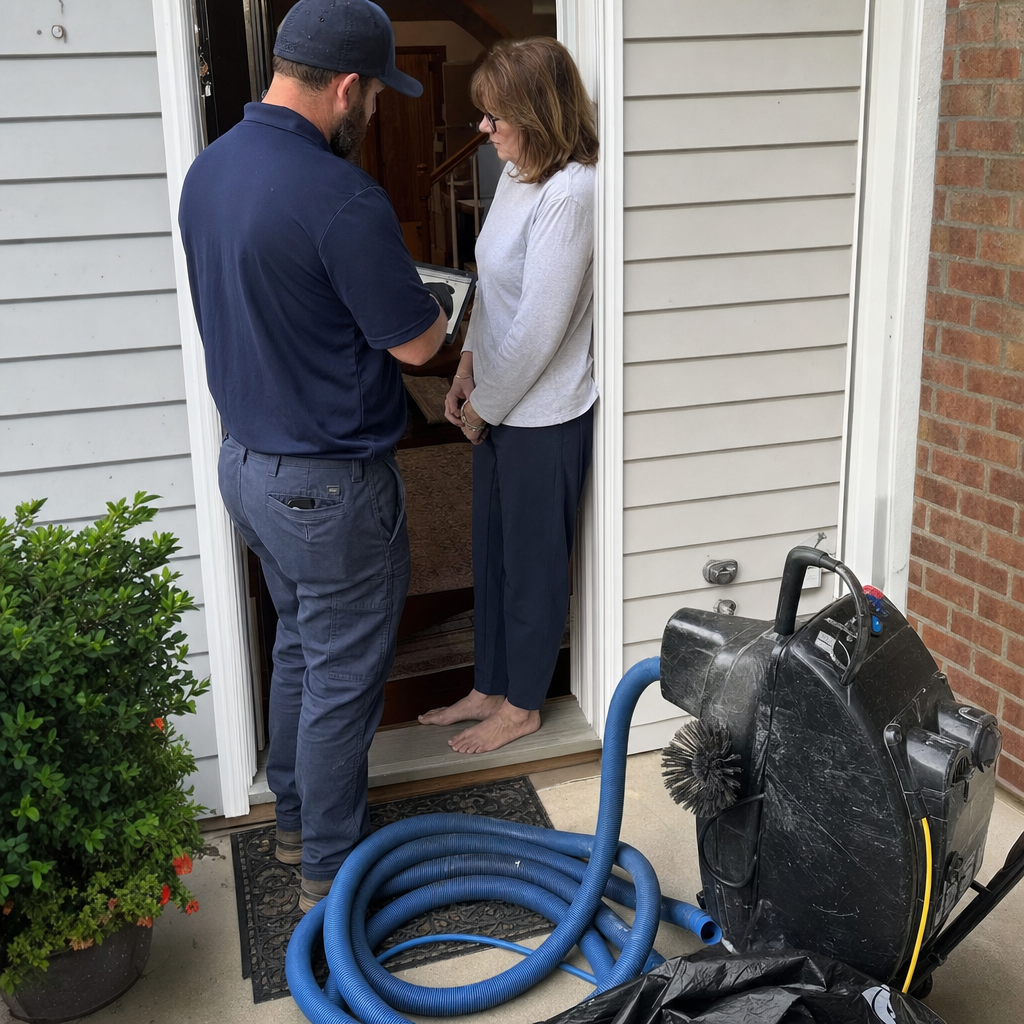
That’s why we changed how we quote. Ronald Cooper handles your job personally — owner on-site, not an oversight call away. He grew up off Tidewater Drive in Norfolk, trained in building mechanics at Tidewater Community College, and has spent his entire working life in this market. He’s cleaned duct systems in century-old Craftsman houses in Norfolk’s Ghent, 1960s brick ranches in Virginia Beach’s Kempsville, and brand-new townhomes off Greenbrier Parkway in Chesapeake. The ductwork in each tells a different story, and that story determines what it actually costs to clean right.
Why Vent Count Is the Wrong Way to Price Duct Cleaning
The industry’s per-vent pricing model is most misleading in whole-house jobs. Counting vents ignores that a 12-vent ranch house with a simple trunk-and-branch layout is nothing like a 12-vent two-story with independent returns on each level.
Here’s what actually drives cost — and what Ronald checks before giving you a number:
- System zones: Single-zone systems with one thermostat and one air handler take roughly half the time of multi-zone setups with separate upstairs/downstairs units. We see a lot of retrofitted dual-zone systems in Virginia Beach’s Great Neck and Hilltop neighborhoods, where homeowners added a second unit rather than fight with original duct sizing.
- Number of air handlers: Each handler means separate return plenums, separate filter racks, and separate cabinet cleanings. A two-handler job isn’t double the price, but it’s never the same as one.
- Duct layout type: Trunk-and-branch systems with rigid metal mains and short flex drops clean faster and more thoroughly than radial flex layouts where every run originates at a central plenum. Radial systems — common in 1990s and 2000s Chesapeake subdivisions — require more setup time and more access point creation.
- Return air configuration: Central returns with jumper ducts are straightforward. Multiple hard-piped returns, especially those dropping through interior walls from second floors, add significant time. We’ve found some Norfolk colonial revivals with returns in every bedroom — elegant for airflow, labor-intensive to clean.
- Access conditions: Ducts in vented attics versus sealed crawl spaces versus conditioned basements — each changes how we set up our Rotobrush and Nikro equipment, and how long the job takes.
“If I can show you what I found, you can decide Is Air Duct Cleaning Worth It? (Virginia, VA).” That’s how Ronald puts it when he’s walked a system and found something unexpected — a disconnected trunk line, a return pulling from a crawl space, a filter rack bypassing air around the filter entirely. These aren’t upsells. They’re the reason you’re calling a specialist instead of a coupon crew.
What Virginia’s Housing Stock Means for Your Cleaning Cost
Virginia’s housing stock spans seven decades of building practices, and the cleaning approach differs significantly between them. A good technician will tell you why — and How Often to Clean Air Ducts? (Virginia, VA) — before the job starts.
1960s–1970s brick ranches — common in Kempsville, Virginia Beach and Port Norfolk, Portsmouth — typically have galvanized steel trunk lines with cast-iron floor registers. The metal holds up well but corrodes at seams. Cleaning requires aggressive brush contact and careful debris containment. Original ductwork in these homes often lacks proper sealing, so we frequently find return pathways pulling from wall cavities or crawl spaces. These jobs run longer but the ductwork can handle it.
1980s–1990s split-levels and colonials — neighborhoods like Hickory in Chesapeake or Larchmont in Norfolk — introduced more flex duct, especially for second-floor supplies. Flex crushes, kinks, and degrades faster than metal. We can’t run aggressive brushes through compromised flex without damaging it further, so these jobs require more diagnostic time upfront and gentler extraction methods. If Ronald finds degraded flex, he’ll flag it before cleaning — because cleaning a collapsing duct is a waste of your money.
2000s–2010s subdivisions — think Red Mill Farm in Virginia Beach or Greenbrier areas of Chesapeake — often went all-flex in vented attics. The insulation jacket on flex duct degrades in Virginia’s attic heat, and we’ve found multiple homes where the inner liner has separated from the insulation, creating a debris trap that standard cleaning won’t touch. These systems also tend toward radial layouts, which we covered above. They’re the most variable in pricing because condition matters more than age.
Historic and custom builds — Ghent, Freemason, Chelsea in Norfolk, older Phoebus homes in Hampton — may have ductwork adapted from gravity furnace systems or added during early forced-air retrofits. No two are alike. Ronald has found supply trunks running through former chimney flues, returns built into plaster walls with no actual duct, and other creative solutions that require custom approaches. These are estimate-in-person jobs, every time.
Virginia’s climate matters too. Our humid summers mean condensation in ductwork, which means microbial growth on debris that wouldn’t grow in drier climates. Our pollen seasons — oak in spring, ragweed in fall — load filters and ductwork heavily. Homes near the Lynnhaven River or Elizabeth River deal with higher ambient moisture and more frequent system cycling. These aren’t excuses to inflate prices. They’re realities that affect how thoroughly a system needs cleaning and whether sanitizing makes sense.
What’s Included in Anchor’s Whole-House Service
Whole-house scope means every supply, every return, main trunk lines, and the air handler cabinet. Here’s exactly what we clean, and what some competitors skip:
| Component | What’s Done | Typical Time Impact |
|---|---|---|
| Supply trunk lines (main) | Rotobrush agitation with HEPA vacuum extraction, each access point sealed after | 45–90 min |
| Supply branch lines to each vent | Brush and vacuum each run from trunk to register; remove and clean registers | 30–60 min |
| Return trunk lines | Same process; often dirtier than supplies due to unfiltered return air | 30–60 min |
| Return branch lines/drops | Cleaned from return grille to trunk; wall cavities checked where accessible | 20–45 min |
| Air handler cabinet | Blower wheel, evaporator coil (visual), filter rack, plenum — debris removal | 30–45 min |
| System sanitizing (optional add-on) | Fogging with Guardsman or equivalent, EPA-registered for HVAC systems | 15–20 min |
Some crews stop at the vents you can see. We don’t. The return side of your system — especially the main return trunk before the filter — is typically the dirtiest section, and skipping it means recirculating that debris immediately. The air handler cabinet matters too: a clean duct system with a filthy blower wheel is like washing your car with a muddy sponge.
Our equipment lineup reflects this thoroughness. We use Rotobrush brush-and-vac systems for aggressive contact cleaning in metal ductwork, Nikro portable HEPA extractors for containment and negative air setup, and Abatement Technologies containment gear when we’re working in occupied spaces or sensitive environments. These aren’t consumer-level shop vacs. They’re the same systems HVAC professionals trust for post-construction and remediation work.
Real Price Ranges for Virginia Whole-House Jobs
Based on 11 years of actual jobs across Hampton Roads — from Suffolk ranches to Virginia Beach oceanfront condos to Portsmouth historic homes — here’s what How Much Does Air Duct Cleaning Cost? (2026 Price Guide) — Virginia, VA looks like when done properly:
| Home/System Type | Typical Range | What Drives the Price |
|---|---|---|
| Single-story ranch, single zone, metal trunk + flex branches, 8–12 vents | $350–$500 | Straightforward access, minimal setup changes |
| Two-story colonial, single zone, mixed duct types, 12–16 vents | $450–$650 | Longer branch runs, more access points, return drops |
| Two-story with dual-zone or two air handlers, 14–20 vents | $550–$850 | Multiple handler cabinets, zone dampers, complex layout |
| Large custom home, 3+ zones, extensive hard-piped returns | $700–$1,200+ | Extended labor, specialized access, possible repair recommendations |
| Add-on: system sanitizing | $75–$150 | Product and application time, varies with system size |
| Add-on: dryer vent cleaning (recommended) | $100–$175 | Separate service, but bundled discount common |
These are ranges from actual quotes Ronald has given and honored. The $99–$199 whole-house offers you see advertised? They typically cover 5–7 “vents” (not the whole house), skip returns and trunk lines, and upsell aggressively on arrival. We’ve been called in after those jobs to finish what they started — or to fix damage from brushes run through degraded flex duct.
Nearly 1,000 verified reviews at 4.9 stars — look them up before you book. That volume reflects consistent, repeatable results across hundreds of real Virginia homes and businesses, not a handful of cherry-picked testimonials.
How Anchor’s Quoting Works (And Why It’s Different)
Ronald Cooper’s approach: he walks the system before quoting, not after arriving with a crew. This means the price given over the phone is the price the job actually costs, because he’s seen enough systems to know what he’s walking into.
Here’s how it works:
- You call (844) 668-1229 and describe your home: age, stories, number of HVAC units, any known duct issues.
- Ronald asks specific questions — about return grille locations, whether you have crawl space or attic access, if you’ve had prior cleaning or duct modifications. He’s listening for the factors that actually affect time and equipment setup.
- He gives a range or firm price based on that conversation. If your description matches what he finds, that’s the price. If he discovers something significantly different — a second air handler you didn’t know about, collapsed flex duct that needs repair before cleaning — he’ll show you before proceeding.
This is owner-operated, equipment-serious work. We’re the alternative to franchise crews who rotate technicians and cut corners on tools. Ronald is the lead technician on every job, backed by professional-grade systems that most competitors simply don’t invest in. One company for cleaning, sealing, repair, and sanitizing — no referrals, no runaround.
11 years of duct work, zero sidelines — this is all we do.
Key Takeaways
- Vent count alone doesn’t determine cost; system architecture — zones, handlers, layout type, returns — is what matters.
- Virginia’s diverse housing stock, from 1960s ranches to modern flex-duct builds, requires different cleaning approaches and time investments.
- Whole-house means every supply, every return, trunk lines, and air handler — verify this scope when comparing quotes.
- Anchor’s pricing reflects actual job complexity assessed upfront, not a low entry price that expands on-site.
FAQs
Air Duct Cleaning Near Me in Virginia, VA typically costs between $350 and $850 for whole-house service, with most homes falling in the $400–$650 range. The exact price depends on your system’s architecture — single-zone versus multi-zone, number of air handlers, and duct layout type — rather than simply counting vents. Call (844) 668-1229 and Ronald Cooper will assess your specific system for an exact quote — estimates are free.
Repairing disconnected or damaged duct sections before cleaning is almost always cheaper than replacing entire runs, and it’s necessary for cleaning to be effective. Collapsed flex duct or separated seams can’t be cleaned properly — debris just recirculates. Ronald flags repair needs during his pre-job walkthrough so you’re not paying to clean a system that won’t hold the results. Call (844) 668-1229 to discuss whether your ductwork needs attention before cleaning.
Same-day service is often available for Virginia homes in Virginia Beach, Norfolk, Chesapeake, and surrounding areas, especially for straightforward single-zone systems. Complex multi-zone jobs or historic homes requiring in-person assessment typically schedule within 24–48 hours. Call (844) 668-1229 — we’ll tell you honestly what’s possible and when.
The $99 price typically covers only 5–7 visible vents, excludes returns and trunk lines, and relies on upselling once on-site. True whole-house cleaning of all supplies, returns, trunks, and the air handler cabinet requires professional equipment and 2–4 hours of skilled labor — costs that can’t be covered at that price point without cutting scope or adding hidden charges. Nearly 1,000 verified reviews at 4.9 stars reflect our commitment to upfront, honest pricing.
Ready to know what your Affordable Air Duct Cleaning in Virginia, VA actually costs? Call (844) 668-1229 for a free estimate. Ronald Cooper will walk through your system with you, explain what your home’s architecture means for the job, and give you a price that doesn’t change when we arrive. No coupons, no surprises — just 11 years of specialized experience applied to your ducts.
Written by Ronald Cooper, Owner & Lead Technician at Anchor Air Duct Cleaning Service Virginia, serving Virginia, VA.
What Our Customers Say
"Found a disconnected run in the crawlspace while they were in there and told me about it rather than cleaning around it."
— Carmen Ramirez"Told me straight that our ducts were in decent shape and didn't need doing every year like the mailer companies claim."
— Raj Reddy"My wife's allergies had been bad in this house since we moved in. It's been two months since they did the ducts and it's noticeably better. Not a miracle, but real."
— Omar Aziz